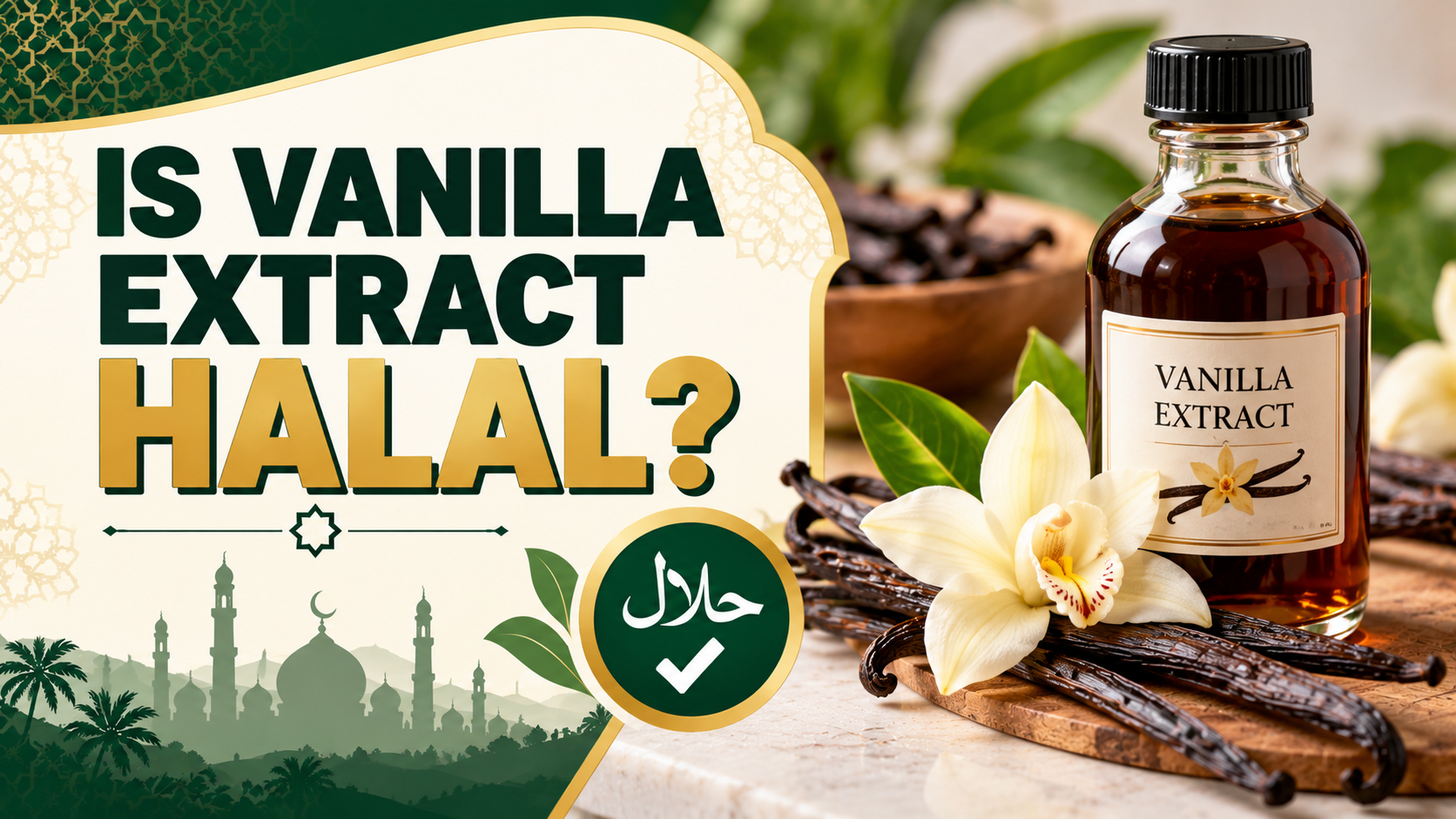
Quick answer: Vanilla extract contains alcohol (usually around 35% ethanol used to extract the flavor), so scholars differ on whether it is halal. Many scholars and halal authorities permit it in baking, because the alcohol is not from an intoxicant like wine, the amount used is tiny, it does not intoxicate, and much of it evaporates during cooking. Other scholars avoid it because it still contains added alcohol. If you prefer to avoid any doubt, use alcohol-free vanilla, vanilla powder, or vanilla flavoring.
This is one of the most searched “is it halal” questions among Muslim home bakers, so let’s break down the reasoning on both sides and the easy alternatives.
Why is vanilla extract a question at all?
Pure vanilla extract is made by soaking vanilla beans in a mixture of water and alcohol (ethanol), which pulls out the flavor. By US standards, pure vanilla extract typically contains around 35% alcohol. Because Islam prohibits intoxicants (khamr) — see Qur’an 5:90 (link to quran.com) — the presence of alcohol is what raises the question.
The view that vanilla extract is permissible
Many contemporary scholars and halal-certification bodies consider vanilla extract permissible in cooking and baking, for several reasons:
- The alcohol is not derived from khamr (wine/date wine) but is industrial/food-grade ethanol.
- The quantity used in a recipe is extremely small and does not intoxicate.
- Much of the alcohol evaporates during baking.
- A key principle: what does not intoxicate in large amounts is not treated like khamr in tiny, non-intoxicating traces.
The view that it is better avoided
Other scholars advise avoiding vanilla extract because:
- It still contains a meaningful percentage of added alcohol in the bottle.
- To be cautious and avoid doubtful matters, halal alternatives are readily available.
On this stricter view, alcohol-free options are preferred, especially for no-bake recipes where nothing evaporates.
Halal alternatives to vanilla extract
| Alternative | Notes |
|---|---|
| Alcohol-free vanilla extract | Glycerin-based; widely available and clearly halal |
| Vanilla powder | Ground vanilla beans; no alcohol |
| Vanilla flavoring / essence | Check the label — choose alcohol-free versions |
| Vanilla beans / paste | Use the seeds directly; check paste labels for alcohol |
How to choose in practice
- For baked goods, many Muslims follow the permissible view and use regular extract.
- To avoid doubt entirely, buy alcohol-free vanilla or vanilla powder.
- For no-bake desserts, prefer alcohol-free options since nothing evaporates.
- Look for a halal-certified product if available.
Frequently asked questions
Is vanilla extract halal or haram?
Scholars differ. Many permit it in baking because the alcohol is not from wine, is a tiny non-intoxicating amount, and largely evaporates. Others avoid it; alcohol-free vanilla removes all doubt.
Does the alcohol in vanilla extract cook off?
Much of it evaporates during baking, though not necessarily all. This is a key reason many scholars permit its use in baked goods.
Is alcohol-free vanilla halal?
Yes. Alcohol-free (glycerin-based) vanilla and vanilla powder are clearly halal.
Is vanilla extract in ice cream halal?
Since ice cream is not cooked, the alcohol does not evaporate, so stricter caution applies. Choosing products with alcohol-free vanilla avoids the concern.
Scholars differ on this issue. This article summarizes mainstream positions for general guidance; consult a qualified scholar for a binding ruling. Reviewed by Mohamed Allan.