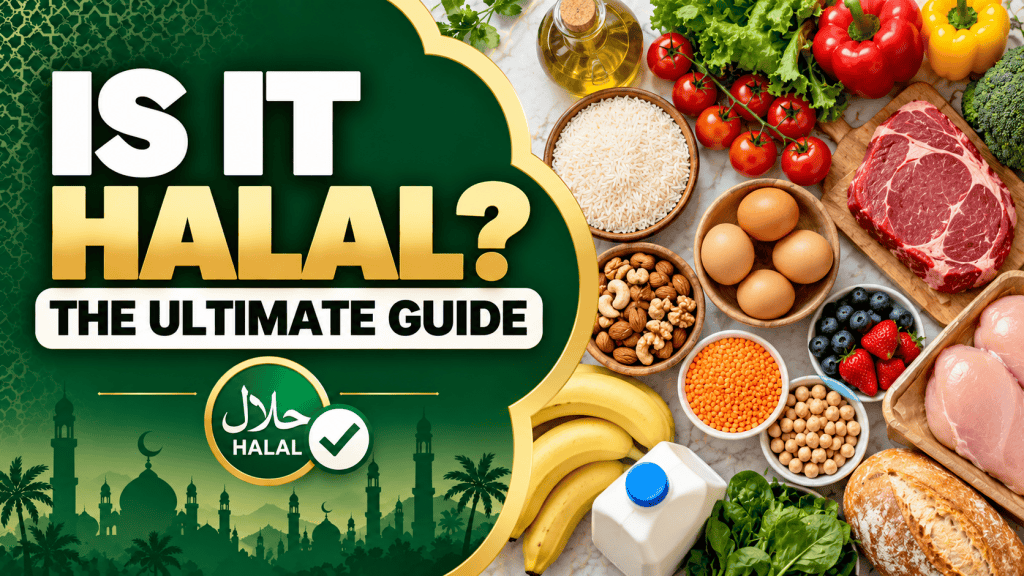
Quick answer: “Halal” means permissible in Islam and “haram” means forbidden. To judge whether something is halal, scholars apply a few principles: everything is permissible by default unless there is clear evidence prohibiting it; anything intoxicating, harmful, or explicitly forbidden (like pork, alcohol, and interest) is haram; and doubtful matters are best avoided. This guide explains those principles and links to clear, evidence-based answers for the most common “is it halal?” questions.
From gelatin in candy to alcohol in vanilla extract, everyday products raise real questions for Muslims. Below is the framework scholars use, followed by a directory of specific answers.
What do halal and haram mean?
Halal is anything permissible under Islamic law. Haram is anything forbidden. Between them, some matters are makruh (disliked) or mushbooh (doubtful). The Qur’an and authentic Sunnah are the primary sources for these rulings.
The principles scholars use
- Default permissibility. In worldly matters, things are halal unless clear evidence makes them haram.
- Clear prohibitions. Pork (Qur’an 2:173), intoxicants and gambling (Qur’an 5:90), and interest/riba (Qur’an 2:275) are explicitly forbidden — link each to quran.com.
- Harm is haram. Anything genuinely harmful to the body tends toward prohibition.
- Avoid the doubtful. When something is genuinely unclear, caution is encouraged.
- Necessity and transformation. Scholars weigh factors like dire need and whether a substance has chemically transformed (istihalah).
Halal questions about food & additives
Processed foods often hide animal- or alcohol-derived ingredients. Start here:
- Is gelatin halal? — depends on the source (pork, beef, or fish).
- Is vanilla extract halal? — the alcohol-content question.
- Are E-numbers halal? — food additives explained.
- Is shrimp & seafood halal?
Halal questions about meat
Meat must come from permissible animals slaughtered correctly. Learn the difference between “halal” and “zabiha” and when each applies in our halal vs zabiha guide.
Halal questions about lifestyle
- Is music halal or haram? — a genuine area of scholarly difference.
- Are tattoos haram?
How to check if a product is halal
- Look for a recognized halal certification logo.
- Read the ingredients for animal- or alcohol-derived items (gelatin, rennet, mono/diglycerides, some E-numbers).
- When a source is unlisted, contact the manufacturer.
- For genuinely doubtful items, choose a clearly halal alternative.
Have a specific “is it halal?” question? Browse our growing library of clear, evidence-based answers on food, additives, and lifestyle. See all halal & haram guides →
Frequently asked questions
What does halal mean?
Halal means permissible in Islam. Haram means forbidden. Some matters in between are disliked (makruh) or doubtful (mushbooh).
How do you know if something is halal?
Scholars apply default permissibility unless clear evidence prohibits it, forbid intoxicants, pork, interest, and harm, and advise avoiding genuinely doubtful matters. Certification and ingredient checks help in practice.
What foods are haram in Islam?
Pork and its by-products, alcohol and intoxicants, blood, carrion, and meat not slaughtered Islamically are haram. Many processed foods require checking for hidden ingredients.
Is it haram to eat doubtful food?
Scholars encourage avoiding genuinely doubtful matters when a clearly halal alternative is available, based on the guidance to steer clear of the doubtful.
This guide summarizes mainstream scholarly principles for general understanding, not binding rulings. Consult a qualified scholar for specific cases. Reviewed by Mohamed Allan.